
Speechkart Therapy Centre - Therapy Centre for Autistic Children in Gurgaon | Child Development Centre
Every child learns and develops at their own pace. However, some children may need additional support to develop communication, social interaction, emotional regulation, and everyday living skills. Finding the right therapy centre for autistic children in Gurgaon can help parents understand their child’s needs and explore suitable therapeutic interventions.
Autism, also known as Autism Spectrum Disorder (ASD), is a neurodevelopmental condition that affects how a person communicates, interacts with others, processes sensory information, and experiences the world. With individualized support and a suitable learning environment, autistic children can develop important skills according to their abilities and needs.
Speechkart Therapy Centre provides therapy services designed to support children’s communication and developmental needs. Choosing an appropriate therapy program can help families work towards meaningful goals while respecting each child’s individuality.
What Is a Therapy Centre for Autistic Children in Gurgaon?
A therapy centre for autistic children provides specialized support to help children develop communication, social, behavioral, and functional skills. The services offered depend on the child’s individual requirements and the qualifications of the professionals involved.
Parents searching for a therapy centre for autistic children in Gurgaon should look for a centre that understands autism, develops individualized therapy plans, and encourages family participation.
Therapy may focus on helping children express their needs, understand instructions, participate in daily activities, interact with others, and manage different situations more comfortably.
The goal is not to change a child’s personality but to support their development, independence, well-being, and ability to communicate.
Why Is Early Support Important for Autistic Children?
Early support can help identify a child’s developmental needs and provide opportunities to develop useful skills. When parents notice differences in communication, social interaction, play, or behavior, consulting a qualified professional can help them understand the next steps.
A suitable therapy centre for autistic children in Gurgaon may offer individualized support based on the child’s strengths, challenges, age, and developmental goals.
Early intervention may help children work on:
Expressing their needs and feelings.
Developing speech and language skills.
Understanding and following instructions.
Building social communication skills.
Improving everyday living skills.
Managing sensory experiences.
Participating in family, school, and community activities.
Every child is different, so progress and therapy requirements can vary.
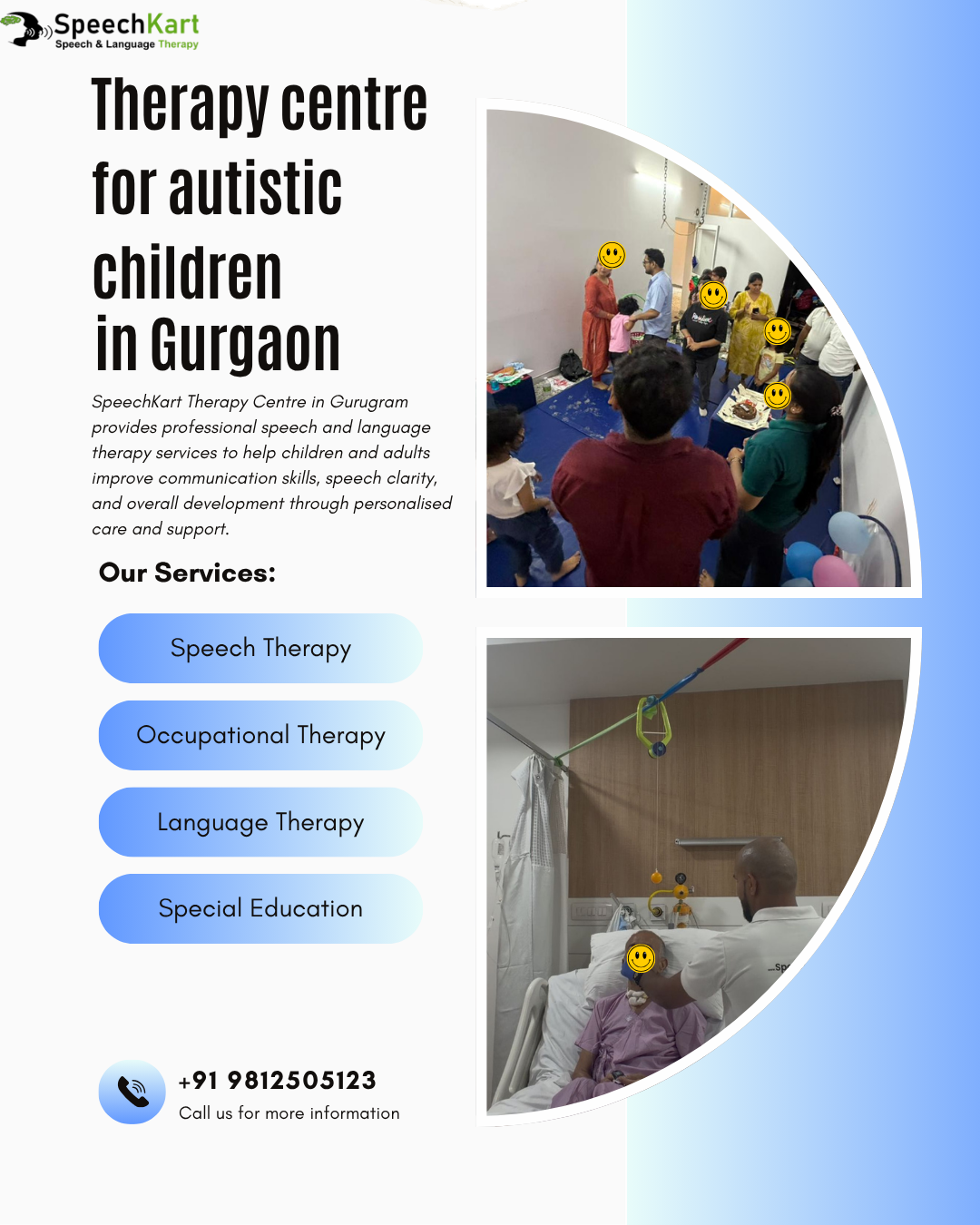
What Therapies Can Help Autistic Children?
Different therapies may support different developmental areas. A qualified professional can help parents determine which services are appropriate for their child.
1. How Can Speech Therapy Help Autistic Children?
Speech therapy can support children who experience difficulties with speaking, understanding language, or communicating their needs.
At a suitable therapy centre for autistic children in Gurgaon, speech and language intervention may focus on helping children:
Develop expressive and receptive language.
Improve their ability to communicate needs and preferences.
Understand words, gestures, and instructions.
Develop conversational and social communication skills.
Improve speech clarity when needed.
Explore alternative and augmentative communication (AAC) when appropriate.
Some autistic children communicate using spoken words, while others may benefit from gestures, picture-based communication, or assistive communication tools.
The approach should respect each child’s communication style and abilities.
2. What Is the Role of Occupational Therapy in Autism?
Occupational therapy may help children develop skills needed for everyday activities, depending on their individual needs.
These activities may include dressing, eating, playing, participating in classroom routines, and developing fine motor coordination.
Occupational therapists may also assess sensory processing differences and help children find appropriate ways to participate comfortably in daily environments.
Parents should consult qualified occupational therapy professionals to determine whether this service would benefit their child.
3. Can Behavioral Support Help Autistic Children?
Some children benefit from structured support to develop communication, coping strategies, daily routines, and functional skills.
Individualized behavioral interventions may help children learn new skills and communicate their needs more effectively. Support should be respectful, developmentally appropriate, and focused on the child’s well-being.
Parents should ask about the methods used, how progress is measured, and whether the child’s preferences and comfort are considered.
4. How Can Social Communication Activities Benefit Children?
Social communication activities can help children practice skills such as taking turns, sharing interests, understanding social situations, and participating in group activities.
These activities should be adapted to each child’s needs and should not require children to hide harmless autistic characteristics simply to appear typical.
A supportive environment encourages meaningful interaction while respecting individual differences.
What Signs May Indicate That a Child Needs Developmental Support?
Parents may consider a developmental assessment if they notice persistent differences in their child’s communication, social interaction, play, or daily functioning.
Some possible signs include:
Delayed development of spoken language.
Difficulty expressing needs or understanding language.
Limited use of gestures to communicate.
Differences in social interaction.
Repetitive movements or patterns of play.
Strong preferences for routines.
Unusual sensitivity or reduced sensitivity to sounds, textures, or other sensory experiences.
These signs do not automatically mean a child is autistic. Only an appropriate professional assessment can help clarify a child’s developmental needs.
If you have concerns, consult a qualified pediatrician or developmental specialist rather than waiting for the child to outgrow them.
How Do You Choose the Right Therapy Centre for Autistic Children in Gurgaon?
Choosing the right centre is an important decision for parents. Consider the following factors before beginning therapy.
Qualified Professionals: Check the qualifications, training, and relevant experience of the therapists working with autistic children.
Individualized Therapy Plans: Every child has different strengths and support needs. Ask whether the therapy plan is based on an assessment and specific developmental goals.
Parent Involvement: Family participation can help parents understand strategies that may support communication and daily routines at home.
Progress Monitoring: Ask how the centre tracks progress, reviews goals, and adjusts therapy when necessary.
Child-Friendly Environment: Look for a welcoming setting where children are treated with patience, dignity, and respect.
Transparent Communication: Professionals should explain the proposed therapy, expected goals, limitations, and any concerns clearly.
When comparing a therapy centre for autistic children in Gurgaon, prioritize your child’s comfort, safety, and individual requirements instead of relying only on promises of rapid improvement.
How Can Parents Support Autistic Children at Home?
Therapy can be supported through everyday activities that encourage communication, independence, and participation.
Parents can consider these approaches:
Use simple, clear language appropriate to the child’s understanding.
Give the child enough time to respond.
Encourage communication through speech, gestures, pictures, or AAC.
Follow the child’s interests during play.
Maintain predictable routines when helpful.
Provide opportunities to practice daily living skills.
Recognize the child’s efforts and preferences.
Communicate regularly with the therapy team.
Avoid comparing your child’s progress with that of other children. Development is individual, and small improvements can be meaningful.
Why Consider Speechkart Therapy Centre for Your Child?
Finding appropriate developmental support starts with understanding your child’s individual needs. Speechkart Therapy Centre focuses on therapy-related support for communication and development.
Parents considering Speechkart Therapy Centre can discuss their child’s concerns, ask about relevant services, and understand which interventions may be appropriate.
Before starting a program, ask about therapist qualifications, assessment procedures, individualized goals, session structure, parent involvement, and progress reviews.
These conversations can help you make an informed decision about whether the centre is suitable for your child.
When Should You Consult a Professional About Your Child’s Development?
Consider seeking professional guidance whenever you have concerns about your child’s speech, language, communication, social interaction, or everyday functioning.
You do not need to wait until a child reaches a particular age to discuss developmental concerns. A qualified professional can assess the situation and recommend appropriate next steps.
If your child has already received an autism diagnosis, the therapy plan should reflect their current abilities, support needs, preferences, and family priorities.
Remember that autism is a spectrum, and no single therapy program is suitable for every child.
Conclusion: Where Can You Find Support for Your Autistic Child in Gurgaon?
Choosing a suitable therapy centre for autistic children in Gurgaon can help families explore professional guidance for communication, social interaction, and everyday developmental needs.
Speechkart Therapy Centre is an option for parents who want to learn more about therapy services and discuss their child’s requirements. The right approach should be individualized, respectful, and focused on meaningful improvements in the child’s quality of life.
With appropriate professional guidance, family involvement, and realistic developmental goals, parents can help their children build skills, express themselves, and participate more comfortably in everyday life.