
Speechkart Therapy Centre - Speech Therapy for Toddlers in Leicester | Toddler Communication Skills
Are you looking for the best Speech Therapy for Toddlers in Leicester? Early communication and language development play an important role in a child’s overall growth. Toddlers learn to communicate through sounds, gestures, words and sentences. However, some children may experience difficulties with speaking, understanding language or expressing their thoughts. These challenges can affect their confidence and everyday communication.
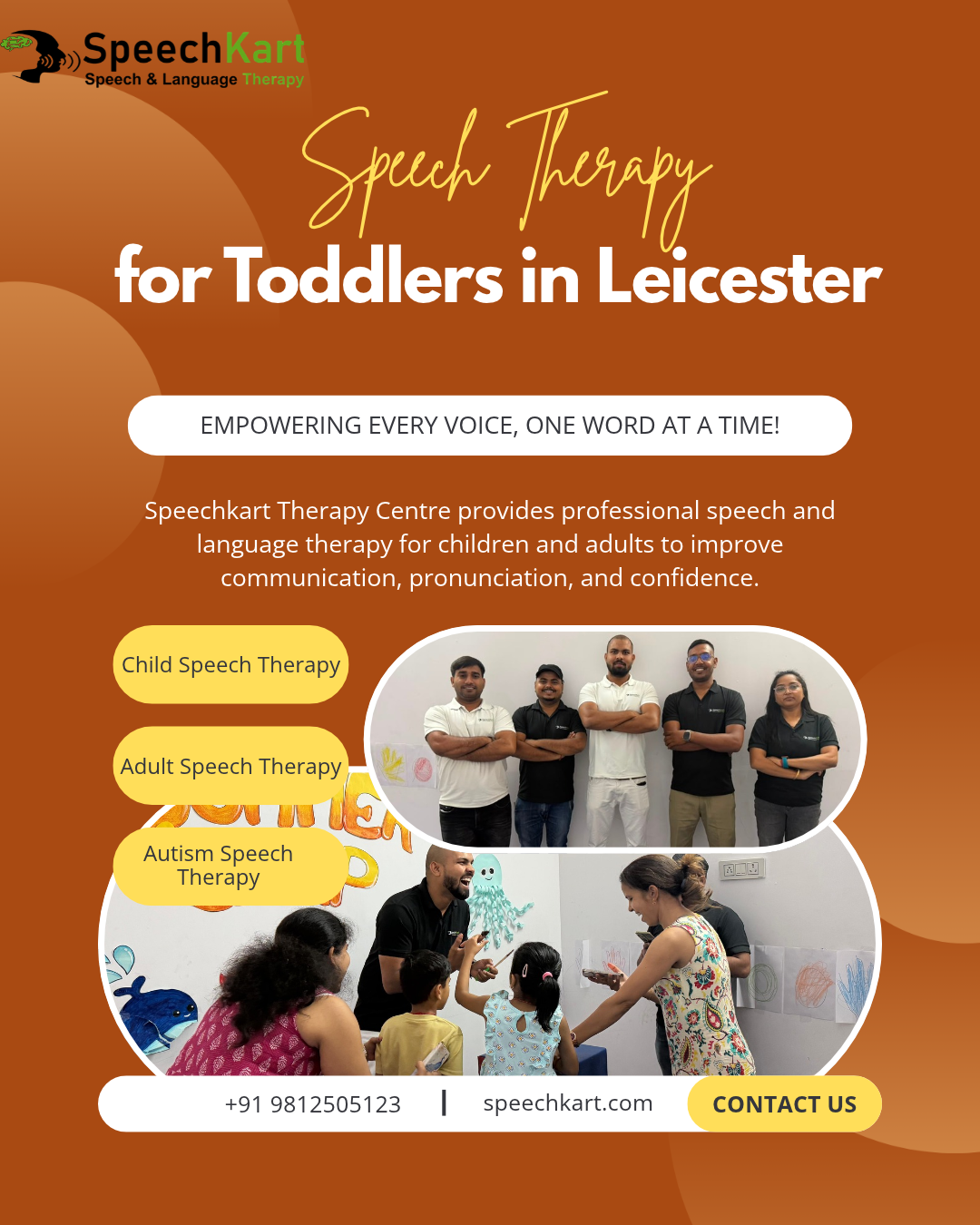
Speechkart Therapy Centre understands the importance of early speech and language development. Professional speech therapy can help toddlers improve their communication abilities through engaging, child-friendly and personalised activities. With the right guidance and regular practice, children can gradually develop stronger communication skills.
Why Is Speech Therapy Important for Toddlers in Leicester?
The toddler years are an important stage for language development. During this period, children begin learning new words, responding to questions and communicating their needs. However, every child develops at a different pace.
Speech Therapy for Toddlers in Leicester can support children who have difficulty developing age-appropriate communication skills.
Speech therapy helps toddlers:
Develop their vocabulary and learn new words.
Improve pronunciation and speech clarity.
Understand simple instructions.
Express their needs and feelings.
Develop social communication skills.
Build confidence while interacting with others.
Early support can help identify communication difficulties and provide suitable strategies for improvement.
What Are the Common Signs of Speech Delay in Toddlers?
Are you concerned that your toddler is not speaking as expected? Recognising early signs of speech delay can help parents seek professional guidance.
Some common signs include:
Limited use of words compared to children of the same age.
Difficulty expressing basic needs.
Not responding consistently to their name.
Difficulty understanding simple instructions.
Limited use of gestures, such as pointing or waving.
Difficulty combining words into short sentences.
Frustration when trying to communicate.
Limited interaction with parents and other children.
If you notice these signs, consulting a qualified speech and language therapist can help you understand your child’s communication needs.
When Should a Toddler Start Speech Therapy?
Many parents ask, when is the right time to begin speech therapy?
Speech therapy can begin as soon as a communication concern is identified. Parents do not need to wait until their child starts school to seek professional support.
Early intervention helps identify specific developmental needs and introduces suitable communication activities.
Speech Therapy for Toddlers in Leicester focuses on supporting young children during their important language-learning years. A therapist may assess the child’s current communication abilities and recommend an appropriate therapy plan.
What Does a Speech Therapist Do for Toddlers?
A speech and language therapist works with children to improve their speaking, listening and communication abilities.
During therapy sessions, different activities may be used depending on the child’s age and individual requirements.
These activities may include:
Picture identification games.
Storytelling and reading activities.
Sound recognition exercises.
Naming familiar objects.
Interactive toys and play-based learning.
Simple question-and-answer activities.
Songs, rhymes and repetition exercises.
Speech therapists use engaging methods to encourage toddlers to communicate naturally.
How Does Play-Based Speech Therapy Help Toddlers?
Can toddlers learn communication skills through playing? Yes! Play is one of the most effective ways for young children to explore language and interact with others.
Play-based speech therapy uses toys, puzzles, picture cards, storytelling and interactive games to encourage communication.
For example, a therapist may use animal toys to teach different sounds and names. Similarly, picture books can help children identify objects and learn new vocabulary.
These activities make Speech Therapy for Toddlers in Leicester more enjoyable and help children practise communication in a comfortable environment.
Can Speech Therapy Help Toddlers Who Understand but Cannot Speak Clearly?
Some toddlers understand what parents say but struggle to express themselves through words. They may use gestures, sounds or incomplete words to communicate.
Speech therapy can help identify the possible reasons behind these difficulties and develop suitable strategies.
Therapy may focus on:
Encouraging meaningful words.
Improving sound production.
Developing vocabulary.
Practising simple phrases.
Improving communication during everyday activities.
Every child’s needs are different, so therapy should be planned according to their communication abilities.
How Can Parents Support Speech Development at Home?
Parents play an important role in their toddler’s speech and language development. Practising communication activities at home can support the progress made during therapy sessions.
Here are some simple ways parents can encourage speech development:
1. Talk Regularly: Communicate with your toddler during daily activities, such as eating, bathing and playing.
2. Read Picture Books: Use colourful picture books to introduce new words and objects.
3. Ask Simple Questions: Encourage your child to respond to easy questions.
4. Sing Songs and Rhymes: Repeating songs can help children recognise sounds and words.
5. Encourage Conversation: Give your toddler enough time to express their thoughts without rushing them.
6. Reduce Screen Time: Encourage more face-to-face interaction and interactive play.
7. Appreciate Their Efforts: Praise your child whenever they attempt to communicate.
Consistent practice at home can complement professional speech therapy.
Why Choose Speechkart Therapy Centre for Speech Therapy?
Choosing the right therapy support is an important decision for every parent. Speechkart Therapy Centre focuses on helping children develop better communication abilities through appropriate speech and language activities.
The centre aims to support children with different communication challenges through individualised therapy approaches.
What Makes Speech Therapy Important for Your Child?
Individual Attention: Activities can be adapted to the child’s communication level and developmental needs.
Early Intervention: Identifying communication difficulties early can help children receive timely support.
Interactive Activities: Play-based exercises encourage children to participate in learning.
Parent Guidance: Parents can learn useful techniques to encourage communication at home.
Communication Development: Therapy focuses on improving speech, language understanding and everyday interaction.
How Long Does Speech Therapy Take for Toddlers?
Parents often wonder how many sessions their toddler will need to start speaking properly.
There is no fixed duration for speech therapy because every child has different communication needs. Some children may need short-term support, while others may benefit from ongoing therapy.
Progress depends on several factors, including the child’s age, communication abilities, underlying difficulties, consistency of therapy and home practice.
A speech therapist can recommend a suitable schedule after assessing the child’s development.
Frequently Asked Questions About Speech Therapy for Toddlers in Leicester
1. What is speech therapy for toddlers?
Speech therapy helps toddlers improve their speaking, listening, understanding and overall communication skills through structured and play-based activities.
2. At what age should a child start speech therapy?
A child can start speech therapy whenever a communication concern is identified. Early assessment can help determine whether professional support is needed.
3. Can speech therapy help a toddler who is not talking?
Yes. Speech therapy can support toddlers who have difficulty developing spoken language and expressing their needs.
4. How can I identify speech delay in my toddler?
Limited vocabulary, difficulty understanding instructions, fewer gestures and problems expressing basic needs can be possible signs of speech and language difficulties.
5. Is speech therapy effective for toddlers?
Speech therapy can help toddlers develop communication skills. Progress depends on their individual needs, consistency and participation.
6. Can parents participate in speech therapy sessions?
Parent involvement is valuable because practising communication strategies at home can support a child’s development.
7. How often should toddlers attend speech therapy?
The frequency of sessions depends on the child’s assessment and individual therapy requirements.
8. Why is early speech intervention important?
Early intervention helps identify communication difficulties and provides opportunities to support language development during the early years.
9. Can play activities improve toddler speech?
Yes. Games, storytelling, songs and interactive activities can encourage toddlers to learn words and practise communication.
10. Where can I find Speech Therapy for Toddlers in Leicester?
Parents looking for speech therapy support can explore Speechkart Therapy Centre and enquire about suitable assessment and therapy options for their child.
Conclusion
Early communication skills are essential for a child’s learning, confidence and social development. If your toddler is experiencing speech or language difficulties, seeking professional guidance can be an important first step.
Speech Therapy for Toddlers in Leicester can help children improve vocabulary, pronunciation, language understanding and everyday communication. With appropriate therapy, parental involvement and regular practice, toddlers can work towards developing stronger communication skills.
Speechkart Therapy Centre aims to support children and families through personalised speech and language development approaches. Give your child the opportunity to build better communication skills and take a positive step towards their developmental journey.