Speechkart Therapy Centre - Speech Therapy for Pronunciation Problems in Gurgaon | Speech Clarity Therapy
Clear communication plays an important role in a child’s learning, social development, and confidence. However, some children and adults find it difficult to pronounce certain sounds or speak words clearly. These pronunciation problems can affect everyday conversations, classroom participation, and social interactions. Speech therapy for pronunciation problems in Gurgaon can help individuals improve their speech clarity and communicate more confidently.
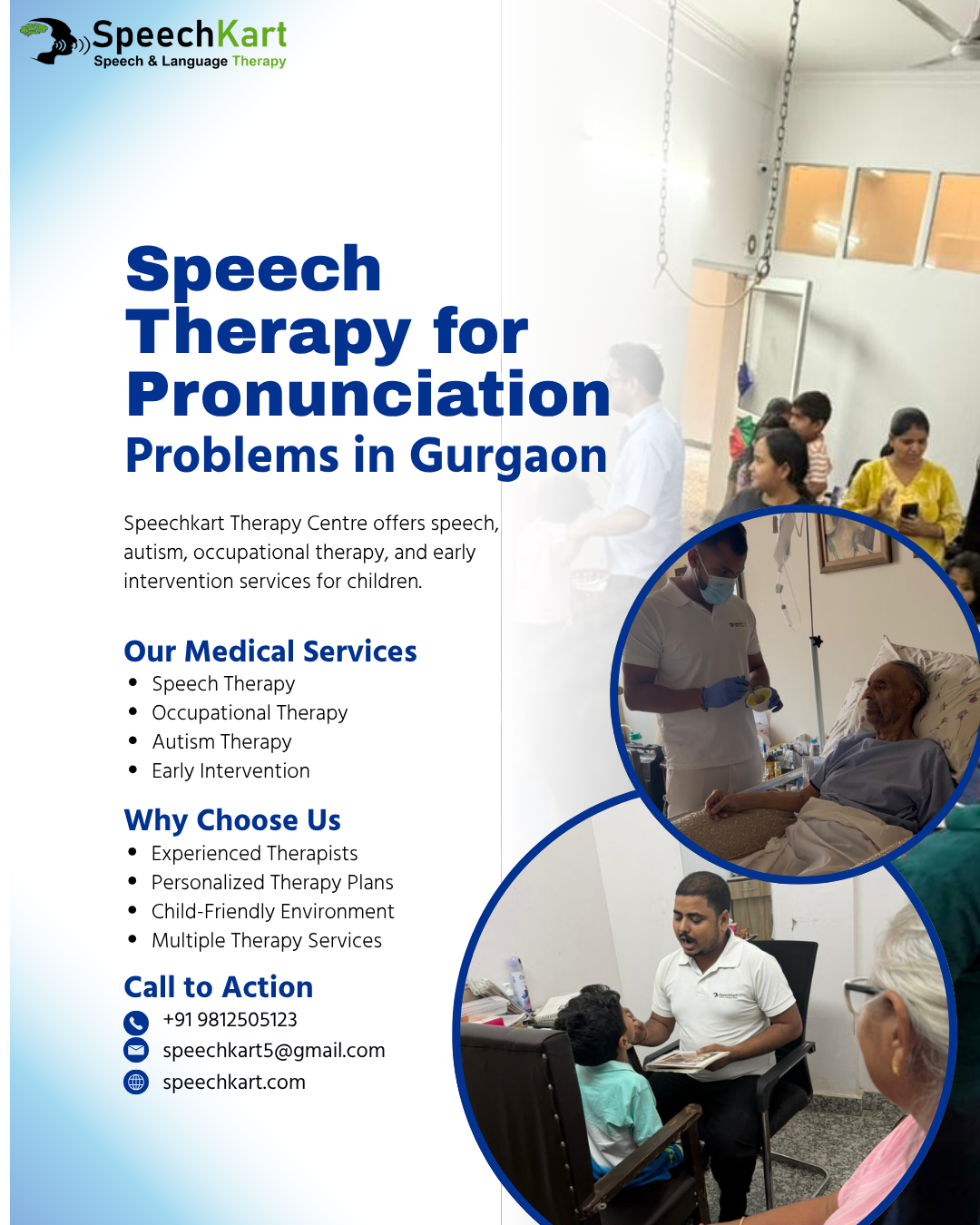
Speechkart Therapy Centre, located in Sector 43, Gurugram, provides speech therapy services to support individuals experiencing pronunciation difficulties. With professional guidance and personalized therapy sessions, children and adults can work towards clearer speech and better communication skills.
What Are Pronunciation Problems?
Pronunciation problems occur when a person has difficulty producing speech sounds correctly. They may replace one sound with another, leave out certain sounds, or pronounce words in a way that makes them difficult to understand.
For example, a child may say “wabbit” instead of “rabbit” or struggle to pronounce sounds such as S, R, L, and TH. Some children may also have difficulty coordinating their lips, tongue, and jaw to produce specific sounds.
While some pronunciation errors are part of normal speech development, persistent difficulties may require professional assessment.
Seeking speech therapy for pronunciation problems in Gurgaon can help identify the underlying difficulty and develop an appropriate treatment plan.
What Are the Common Signs of Pronunciation Problems?
Recognizing pronunciation difficulties early can help individuals receive the right support. Common signs include:
Difficulty pronouncing specific sounds correctly.
Replacing one speech sound with another.
Leaving out sounds from words.
Speaking unclearly during conversations.
Difficulty being understood by family members, teachers, or friends.
Avoiding conversations because of speech difficulties.
Feeling frustrated when others cannot understand what is being said.
If these signs persist or affect everyday communication, consulting a qualified speech-language professional may be helpful.
Why Do Children Develop Pronunciation Problems?
Several factors may contribute to pronunciation difficulties in children. Understanding the possible causes helps speech-language professionals plan suitable therapy activities.
1. Speech Sound Development Delays
Children develop speech sounds gradually. Some sounds are more difficult to learn than others. If a child continues to struggle with sounds beyond the expected developmental stage, a speech assessment may be beneficial.
2. Articulation Difficulties
Articulation refers to the physical production of speech sounds using the tongue, lips, teeth, and jaw. Difficulties coordinating these structures can affect how clearly a child pronounces words.
3. Phonological Difficulties
Some children have difficulty understanding or using the sound patterns of their language. They may follow patterns such as replacing several sounds with one easier sound or leaving out sounds from words.
4. Hearing Difficulties
Hearing plays an important role in learning speech sounds. Hearing difficulties may affect a child’s ability to recognize and reproduce certain sounds accurately. A hearing assessment may be recommended when appropriate.
5. Oral-Motor or Neurological Conditions
Certain medical or neurological conditions can affect the movements involved in speech production. A qualified professional can assess the individual’s needs and recommend appropriate support.
How Can Speech Therapy for Pronunciation Problems in Gurgaon Help?
Speech therapy for pronunciation problems in Gurgaon focuses on helping individuals produce speech sounds more accurately and improve overall communication.
At Speechkart Therapy Centre, therapy goals can be tailored to an individual’s age, speech difficulties, language background, and communication needs.
Individual Speech Assessment
The process generally begins with an assessment of speech clarity, sound production, and communication abilities. The speech-language professional identifies the sounds that need attention and determines suitable therapy goals.
Sound Production Exercises
Therapy may include activities that teach individuals how to position their tongue, lips, and jaw correctly to produce specific sounds.
For example, a therapist may demonstrate the correct tongue placement for the S sound and guide the individual through repeated practice.
Word and Sentence Practice
After learning to produce a sound correctly, individuals practise using it in words, phrases, and complete sentences. This gradual approach helps them apply their skills to everyday conversations.
Listening and Sound Discrimination
Some individuals benefit from activities that help them distinguish between similar speech sounds. Listening exercises can support their ability to recognize differences between sounds and improve accurate production.
Personalized Therapy Activities
Children often learn effectively through interactive activities, picture cards, storytelling, games, and repetition. These activities can make speech practice more engaging and encourage participation.
Home Practice Guidance
Regular practice at home can support progress between therapy sessions. Parents and caregivers may receive guidance on practising target sounds through short, enjoyable activities.
When Should You Consult a Speech Therapist?
Parents often wonder whether their child’s pronunciation difficulties will improve naturally or require professional support.
Consider consulting a speech-language professional if:
Your child is frequently difficult to understand.
Certain pronunciation errors persist and affect communication.
Your child becomes frustrated when trying to speak.
Teachers report that your child has difficulty communicating clearly.
Your child avoids speaking in social situations.
Speech difficulties affect confidence or participation in daily activities.
Adults can also benefit from speech therapy if pronunciation difficulties affect their professional, academic, or personal communication.
There is no need to wait until pronunciation problems become severe. An assessment can help clarify whether support is needed.
Can Speech Therapy Improve Pronunciation in Adults?
Yes. Speech therapy for pronunciation problems in Gurgaon can also benefit adults who want to improve speech clarity.
Adults may seek therapy because of persistent speech sound difficulties, neurological conditions, or changes in speech following a medical event.
Therapy goals depend on the underlying cause. A speech-language professional may work on sound production, speech clarity, pacing, and communication strategies.
For adults recovering from a stroke or experiencing other neurological conditions, speech therapy may form part of a broader rehabilitation plan.
How Long Does Speech Therapy Take to Improve Pronunciation?
The time required to improve pronunciation varies from person to person. Progress depends on factors such as the type of speech difficulty, the number of sounds involved, the individual’s age, consistency of practice, and any underlying conditions.
Some individuals may make progress with a small number of sounds relatively quickly, while others require ongoing support.
Regular attendance, appropriate therapy goals, and guided home practice can help reinforce newly learned skills. However, results cannot be guaranteed within a fixed period.
How Can Parents Support Pronunciation Practice at Home?
Parents play an important role in supporting their child’s communication development. Simple daily activities can complement professional therapy.
Speak clearly: Use a natural speaking pace and pronounce words clearly.
Model correct pronunciation: Repeat the word correctly without repeatedly criticizing the child’s mistake.
Read together: Picture books and stories provide opportunities to practise words and sounds.
Play sound games: Use age-appropriate games to practise target sounds.
Encourage conversation: Give your child time to express thoughts without pressure.
Follow professional guidance: Practise the specific activities recommended by the speech therapist.
Avoid forcing a child to repeat words excessively or making them feel embarrassed about pronunciation errors. Positive encouragement can make communication practice more comfortable.
Why Choose Speechkart Therapy Centre in Gurgaon?
Finding appropriate support is an important step towards improving communication. Speechkart Therapy Centre offers speech therapy services for individuals who need help with speech and communication difficulties.
Located in Sector 43, Gurugram, the centre can support families seeking professional guidance for pronunciation and speech clarity concerns.
When choosing a speech therapy centre, consider the following factors:
Assessment of individual speech and communication needs.
Personalized therapy goals.
Age-appropriate and engaging activities.
Guidance for parents and caregivers.
Regular progress reviews.
Clear communication about therapy goals and expected progress.
The right therapy approach depends on an individual’s specific needs, so a professional assessment is an important starting point.
Where Can You Find Speech Therapy for Pronunciation Problems in Gurgaon?
If you are searching for speech therapy for pronunciation problems in Gurgaon, Speechkart Therapy Centre is located at:
Speechkart Therapy Centre
House No. 754, Sector 43, Gurugram, Haryana – 122009.
Phone: +91 9812505123
Email: speechkart5@gmail.com
Website: speechkart.com
Contact the centre to enquire about speech assessments, available therapy services, and suitable appointment options.
Frequently Asked Questions (FAQs)
1. What is the best treatment for pronunciation problems?
Speech therapy can help address pronunciation difficulties through assessment, sound production exercises, listening activities, and guided practice tailored to the individual’s needs.
2. At what age should a child receive speech therapy?
A child can receive a speech-language assessment when concerns about speech development arise. The appropriate timing depends on the child’s age, developmental stage, and specific difficulties.
3. Can pronunciation problems be corrected completely?
Many pronunciation difficulties can improve with appropriate support and practice. Outcomes vary depending on the underlying cause and the individual’s needs.
4. Is speech therapy useful for adults with pronunciation problems?
Yes. Adults may benefit from speech therapy to improve sound production, speech clarity, and everyday communication, depending on the cause of their difficulties.
5. How often should a child attend speech therapy?
The recommended frequency depends on the child’s assessment results, therapy goals, and individual needs. A speech-language professional can suggest a suitable schedule.
6. Can parents practise pronunciation exercises at home?
Yes. Home practice can support therapy progress when activities are recommended by the speech-language professional and are appropriate for the child’s needs.
7. Does Speechkart Therapy Centre provide speech therapy in Gurgaon?
Speechkart Therapy Centre is located in Sector 43, Gurugram. Contact the centre directly to confirm the available pronunciation therapy services and appointment details.
8. How can I book a speech therapy appointment in Gurgaon?
You can contact Speechkart Therapy Centre by phone at +91 9812505123 or email speechkart5@gmail.com to enquire about appointments and speech assessments.
Conclusion
Pronunciation difficulties can affect confidence, learning, and everyday communication, but appropriate support can help individuals develop clearer speech. Early assessment, personalized speech therapy, and regular guided practice can make a meaningful difference.
If you are looking for speech therapy for pronunciation problems in Gurgaon, Speechkart Therapy Centre in Sector 43, Gurugram, is a place to contact for information about assessment and therapy options. With an individualized approach and family support, children and adults can work towards clearer and more confident communication.