Speechkart Therapy Centre - Best Speech Therapy Centre in Dwarka | Speech and Language Therapy
Are you looking for the Best Speech Therapy Centre in Dwarka to improve communication, speech clarity, language development, and confidence? Speech and language difficulties can affect children and adults in different ways. Some children may experience delayed speech, difficulty pronouncing words, or challenges in expressing their thoughts, while adults may face communication problems due to neurological conditions, strokes, or other medical issues. Getting the right professional support at the right time can make a significant difference.
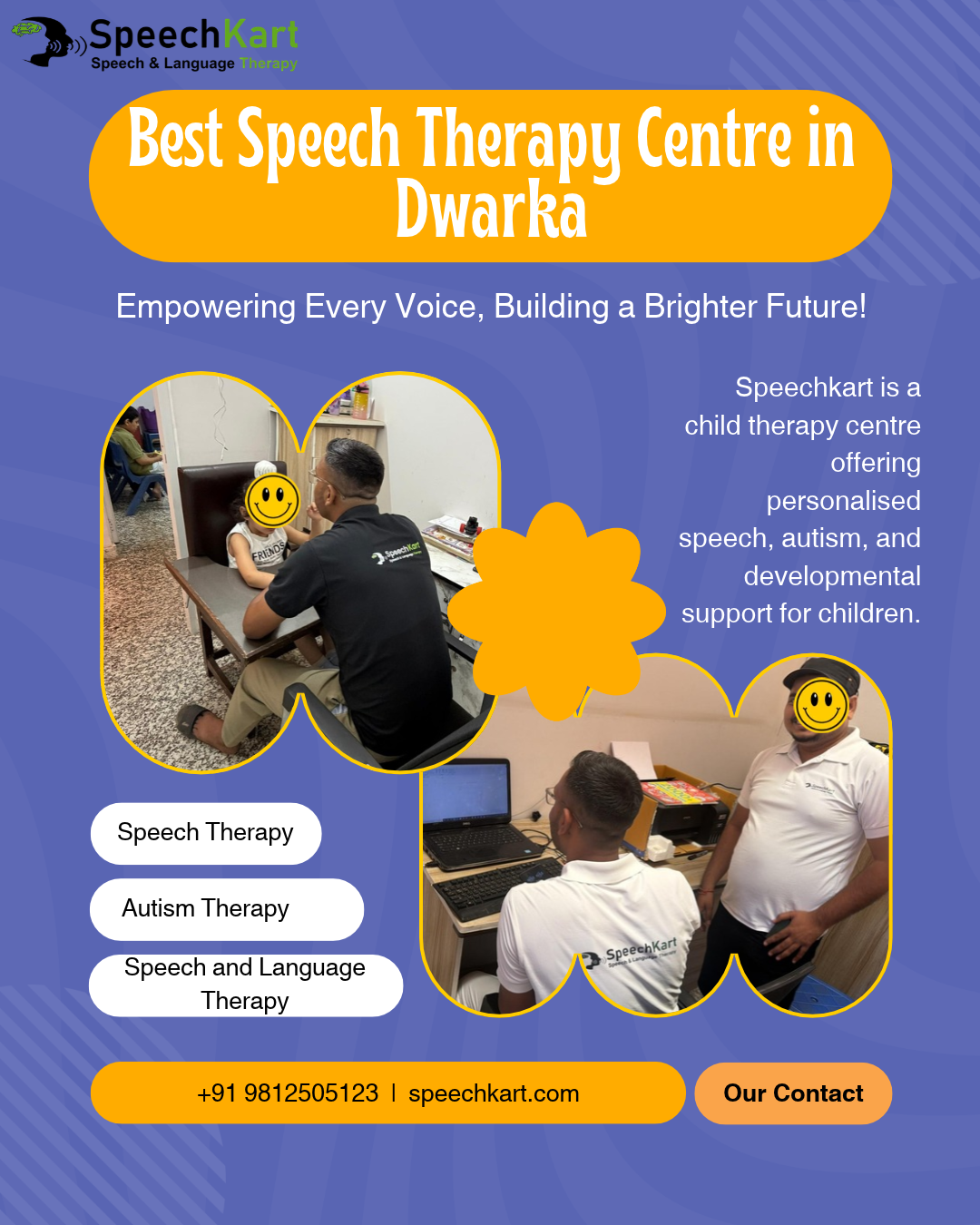
Speechkart Therapy Centre focuses on providing professional speech and language therapy to individuals who need support with communication and speech development. With personalized therapy approaches, professional guidance, and structured treatment plans, the centre aims to help children and adults improve their communication abilities and lead more confident lives.
If you are searching for the Best Speech Therapy Centre in Dwarka, Speechkart Therapy Centre can be a suitable choice for understanding and addressing different speech and language challenges.
Why Choose the Best Speech Therapy Centre in Dwarka?
Choosing the right speech therapy centre is an important step towards improving communication skills. Every individual has different speech and language needs, which is why personalized therapy plays an important role.
Speechkart Therapy Centre focuses on understanding each individual’s difficulties before recommending suitable therapy sessions.
Here are some reasons to consider a professional speech therapy centre:
Individualized speech and language therapy plans.
Support for children and adults.
Professional assessment of communication difficulties.
Activities designed to improve speech clarity and language skills.
Focus on confidence and everyday communication.
Regular progress monitoring and guidance.
Finding the Best Speech Therapy Centre in Dwarka can help individuals receive appropriate support according to their communication needs.
What Is Speech Therapy and Who Needs It?
Speech therapy is a professional service that helps individuals improve their speech, language, voice, fluency, and communication skills.
But who actually needs speech therapy?
Children who have difficulty speaking, understanding instructions, forming sentences, or pronouncing words may benefit from speech therapy. Adults experiencing stammering, voice problems, or communication difficulties after a stroke may also require professional assistance.
Speech therapy can help with:
Speech delays in children.
Language development difficulties.
Stammering and stuttering.
Pronunciation and articulation problems.
Autism-related communication challenges.
Voice disorders.
Communication difficulties after a stroke.
Difficulty understanding or expressing language.
At Speechkart Therapy Centre, therapy focuses on improving functional communication through appropriate activities and individualized approaches.
What Speech Therapy Services Are Available at Speechkart Therapy Centre?
Looking for the Best Speech Therapy Centre in Dwarka means finding a place that understands different communication challenges. Speechkart Therapy Centre focuses on several areas of speech and language development.
1. Child Speech Therapy
Does your child understand everything but struggle to speak? Does your child use fewer words than other children of the same age?
Child speech therapy focuses on improving vocabulary, sentence formation, pronunciation, and everyday communication. Therapy activities may include interactive games, picture identification, storytelling, and language-building exercises.
2. Autism Speech Therapy
Children with autism may experience difficulties with verbal and non-verbal communication. Some children may speak very little, while others may struggle with conversations, understanding social cues, or expressing their needs.
Autism speech therapy focuses on developing functional communication, understanding language, social interaction, and alternative communication methods when required.
3. Speech Delay Therapy
Is your child not speaking according to their age? Does your child communicate through gestures instead of words?
Speech delay therapy helps children develop vocabulary, understand language, and express their thoughts. Early assessment and intervention can help identify communication difficulties and provide appropriate support.
4. Stammering and Stuttering Therapy
Do you experience repeated sounds, prolonged words, or blocks while speaking?
Stammering can affect communication and confidence in both children and adults. Speech therapy focuses on improving speech fluency, managing communication difficulties, and developing confidence through structured techniques.
5. Articulation and Pronunciation Therapy
Does your child pronounce certain words incorrectly? Do people find it difficult to understand your child’s speech?
Articulation therapy helps individuals produce speech sounds correctly. Exercises may focus on tongue placement, lip movement, sound production, and clear pronunciation.
6. Voice Therapy
Do you experience a hoarse, weak, strained, or unusual voice?
Voice therapy helps individuals improve voice quality, pitch, breathing coordination, and vocal habits. It can be useful for people experiencing different types of voice disorders.
7. Adult Speech Therapy
Can adults also benefit from speech therapy? Absolutely!
Adults may require speech therapy because of stroke, Parkinson’s disease, neurological conditions, voice disorders, or fluency difficulties. Therapy aims to improve communication, speech clarity, and everyday functional abilities.
Why Is Early Speech Therapy Important for Children?
Early identification of speech and language difficulties is important for a child’s overall development.
When communication problems are identified early, children can receive appropriate guidance and support. Early intervention may help improve vocabulary, listening skills, understanding, sentence formation, and social communication.
Parents should consider a professional assessment if their child:
Does not respond consistently to their name.
Uses very few words for their age.
Has difficulty understanding simple instructions.
Struggles to form sentences.
Finds it difficult to communicate needs.
Has unclear speech.
Avoids social communication.
Are you noticing these signs in your child? Consulting a qualified speech-language professional can help you understand whether an assessment or therapy is required.
How Does Speech Therapy Work?
Many parents and adults wonder what happens during a speech therapy session.
The process generally involves the following steps:
1. Initial Assessment: The therapist understands the individual’s speech, language, voice, and communication difficulties.
2. Personalized Therapy Plan: Based on the assessment, suitable therapy goals and activities are selected.
3. Regular Therapy Sessions: Sessions involve structured exercises, interactive activities, and communication-based tasks.
4. Progress Monitoring: Improvements are reviewed regularly, and therapy goals are adjusted when required.
5. Home Practice: Parents and caregivers may receive activities to encourage communication practice outside therapy sessions.
Consistency and regular practice are important parts of the therapy process.
How Can Parents Support Speech Development at Home?
Parents play an important role in supporting their child’s communication development. Simple daily activities can encourage children to communicate more confidently.
Here are some helpful activities:
Talk to your child during everyday activities.
Read colourful picture books together.
Encourage your child to name familiar objects.
Ask simple questions and allow time for responses.
Sing rhymes and nursery songs.
Play interactive communication games.
Appreciate your child’s efforts to communicate.
Remember, every child develops at a different pace. Avoid comparing your child’s progress with other children and seek professional guidance whenever you have concerns.
How to Choose the Best Speech Therapy Centre in Dwarka?
Selecting the right therapy centre requires careful consideration. Parents and adults should look for a centre that understands individual communication needs and provides appropriate professional guidance.
Before choosing a centre, consider the following:
Does the centre provide individualized assessments?
Are therapy goals based on individual needs?
Does it offer services for children and adults?
Are parents involved in the therapy process?
Is progress monitored regularly?
Does the centre explain therapy methods clearly?
The Best Speech Therapy Centre in Dwarka should focus on meaningful communication improvements rather than following the same approach for everyone.
Why Consider Speechkart Therapy Centre?
Speechkart Therapy Centre aims to support individuals experiencing speech, language, voice, and communication difficulties. The centre focuses on understanding individual challenges and providing suitable therapy approaches for children and adults.
Whether your child has delayed speech, autism-related communication difficulties, pronunciation problems, or stammering, seeking timely professional guidance can be an important step.
Speechkart Therapy Centre emphasizes personalized attention, communication development, structured therapy activities, and continuous support.
Frequently Asked Questions (FAQs)
1. Which is the Best Speech Therapy Centre in Dwarka?
Speechkart Therapy Centre is an option to consider when looking for professional speech and language therapy for children and adults.
2. At what age should a child start speech therapy?
Speech therapy can begin whenever a communication difficulty is identified. Early assessment is recommended if parents notice developmental concerns.
3. Can speech therapy help children with autism?
Yes, speech therapy can help children with autism develop functional communication, language understanding, social interaction, and alternative communication skills.
4. How long does speech therapy take to show results?
The duration depends on the individual’s condition, communication needs, therapy goals, and consistency of practice.
5. Can adults receive speech therapy?
Yes, adults can benefit from speech therapy for stammering, voice disorders, stroke-related communication difficulties, and other speech or language challenges.
6. Can speech therapy improve pronunciation?
Yes, articulation therapy helps individuals practise speech sounds and improve pronunciation and speech clarity.
7. Is early intervention important for speech delay?
Yes, early assessment and appropriate intervention can support communication development and help address difficulties at an early stage.
8. Can parents practise speech therapy activities at home?
Yes, parents can support communication development through reading, storytelling, interactive games, and therapist-recommended exercises.
9. Does speech therapy help with stammering?
Yes, speech therapy can help individuals work on fluency, manage stammering, and develop more comfortable communication strategies.
10. Why should I choose Speechkart Therapy Centre?
Speechkart Therapy Centre focuses on personalized speech and language support, communication development, and suitable therapy approaches for children and adults.
Conclusion
Communication is an essential part of everyday life, and speech or language difficulties should not be ignored. With appropriate assessment, professional guidance, and consistent practice, individuals can work towards improving their communication abilities.
If you are searching for the Best Speech Therapy Centre in Dwarka, consider Speechkart Therapy Centre for understanding different speech and language challenges and exploring suitable therapy options.
Take the first step towards better communication, improved speech clarity, and greater confidence with professional speech therapy support.